


Totango alternatives: find the right fit for your customer success team
Totango alternatives: the short answer
Teams look for Totango alternatives for the same reasons they leave most customer success platforms: the upkeep needs an administrator, implementation is measured in months, and the contract runs for a year or more. Totango now trades as Odie, and Odie's announcement (opens in a new tab) says existing Totango and Catalyst customers keep the same contract, pricing and product for now.
Totango stops fitting lean customer success and account management teams that have no dedicated platform administrator and use only a small part of the feature set. Those teams pay for configuration they cannot maintain and for dashboards that still need a person to read them and act.
This page compares seven alternatives: Gainsight, ChurnZero, Custify, Vitally, Planhat, HubSpot Service Hub and Trig. Every price below comes from the vendor's own website and is dated as of November 13, 2026. Trig, which publishes this page, is an agent-powered workspace for account management and customer success, where AI agents do the account work and the team reviews it. If Gainsight is also on your list, the Gainsight alternatives guide covers that decision.
What Totango does well
Totango has more than 15 years behind it as a customer success platform, which Odie's CEO describes (opens in a new tab) as a leadership position in the category. Hundreds of enterprise customers have run their post-sales programs on it.
G2's product description (opens in a new tab) lists the core of the product as customer health tracking, customizable dashboards, real-time analytics and automated workflows, with an AI layer called Unison Customer Intelligence that pulls data from several sources to show customer behavior. The same description says Totango targets mid-sized to large enterprises that put retention, renewals and expansion first.
Totango still suits that team best: a larger customer success organization with an operations owner who builds and maintains the programs, and the patience to let a configured platform pay back over a year or more.
Why teams look for a Totango alternative
The clearest description of the problems comes from Odie's own CEO, Keith Frankel, whose September 10, 2026 letter (opens in a new tab) explains why the company moved beyond the traditional platform. His points, summarized below, apply to the category as a whole, Totango included.
- The administration never ends. The letter describes traditional customer success platforms as dozens of objects and hundreds of fields, and "a permanent part-time job for whoever inherits the admin seat."
- Nothing happens until someone writes the rule. These systems act only on conditional logic that someone has already written, so they surface what someone already thought to look for.
- A person has to interpret everything. The platform shows charts and tables, and someone on the team has to decide what they mean every day.
- Activity has to be logged by hand. The letter says these platforms measure the activity people are made to log, so the record shows the effort and leaves the value of that effort unmeasured.
- Implementation takes months. G2 reviewers report an average of 3 months to implement Totango, and Odie's pricing FAQ (opens in a new tab) says to plan for about eight weeks to go live on its newer products.
- The commitment is annual. Odie's terms start at one year, most customers sign for two, and there is no month-to-month option.
The letter also claims that most companies that leave a traditional customer success platform never buy another one. That is the CEO's claim, and the letter does not give a source for it, but it matches the reason many teams start searching: they want software that does the account work, and the platform they have asks them to maintain it instead.
Totango alternatives compared
The table sets out who each option suits, how it prices and where it differs. Each best-fit and key difference is taken from how the vendor describes itself on its own site. Prices are as published on November 13, 2026, and a vendor that publishes no price is marked as quote-only.
| Tool | Best for | Pricing (as of Nov 13, 2026) | Key difference | Verdict |
|---|---|---|---|---|
| Totango, now Odie | Mid-sized to large enterprises focused on retention, renewals and expansion | From $500/month (Customer Knowledge Engine) or $1,500/month (Customer Operating System); no seat pricing; one-year minimum; existing customers keep current pricing | Odie captures what the team knows about each customer and feeds it to post-sales agents, its own or yours | Worth a fresh look for current customers before renewal, on a one- or two-year term |
| Trig | Lean customer success and account management teams that want AI agents doing the account work | $250/month for up to 500 accounts, then $1 per account per month; unlimited users; first three months upfront, then monthly | Agents find risks and opportunities, act in the tools the team already uses and measure the results | The fit for teams with more accounts than people to cover them |
| Custify | Smaller SaaS customer success teams that want a guided start | No published prices; no setup fees | Concierge onboarding, with Custify saying teams get started in 4 weeks; listed first among G2's top-rated Totango alternatives | A traditional platform with a guided setup, for teams that still want one |
| Gainsight | Large customer success organizations wanting customer success, product experience, community and education in one suite | Quote-only; plans set a number of full users and customers per user; pricing on ARR and customers managed announced for next year | The broadest suite in the category, with an operations team expected to run it | Strong where a dedicated admin and budget already exist |
| ChurnZero | Teams that want a customer success platform with built-in AI agents and an assistant | No pricing page on churnzero.com; pricing through a demo | Describes itself as an AI platform and partner for customer growth, with an AI assistant called Kit | Evaluate through a demo, since nothing can be compared up front |
| Planhat | Companies that want one system across sales, customer success and professional services | Quote-based; platform fee plus a minimum number of Core Users; unlimited View Users; billed annually upfront | A CRM, customer success platform and services tool in one product | Suits teams consolidating several post-sales functions |
| Vitally | Teams running tech-touch, hybrid or high-touch customer success | Three plans (Tech-Touch, Hybrid-Touch, High-Touch), all "Request Pricing"; unlimited observer seats | The same features on every plan, with plans split by coverage model | A good match when the coverage model is already decided |
| HubSpot Service Hub | Teams whose customer work already lives in HubSpot | Professional from $90/seat/month billed annually, plus a required one-time $1,500 onboarding fee; health scores from Professional | Help desk and customer success tools inside the CRM the team already uses | Practical for HubSpot shops whose post-sales motion stays close to the CRM |
Sources: Odie pricing (opens in a new tab), Trig pricing, Custify pricing (opens in a new tab), Gainsight pricing (opens in a new tab) and Gainsight's October 20, 2026 announcement (opens in a new tab), ChurnZero (opens in a new tab), Planhat pricing (opens in a new tab), Vitally pricing (opens in a new tab), HubSpot Service Hub pricing (opens in a new tab) and G2's Totango page (opens in a new tab), all read November 13, 2026. For a closer look at one pairing, see Trig vs Gainsight.
What Totango (now Odie) costs, and who publishes pricing
Totango, now Odie, publishes starting prices: from $500 a month or $1,500 a month, with a one-year minimum. Each product is priced differently.
| Odie product | Starting price | What sets the price |
|---|---|---|
| Customer Knowledge Engine | From $500/month | How many business unit, customer and employee knowledge graphs Odie keeps current, plus an access fee for the MCP connection to your AI tools |
| Customer Operating System | From $1,500/month | Customer portfolio size, how deep and how often each account is analyzed, and an "AI Success" pool of tokens and service hours |
There is no seat pricing on either product. Terms start at one year, most customers sign for two, and month-to-month payment is not offered. Odie says it never charges automatically for overages on the AI Success pool.
Across this shortlist, three vendors publish prices: Odie (starting prices), HubSpot Service Hub and Trig. Gainsight, Custify, Planhat and Vitally show no prices on their own pricing pages, and ChurnZero has no pricing page.
Trig pricing is set by the number of accounts monitored. With weekly monitoring, the published rates work out as follows.
| Accounts monitored weekly | Trig monthly price |
|---|---|
| 100 | $250 |
| 500 | $250 |
| 1,000 | $750 |
| 2,000 | $1,750 |
Daily monitoring adds $9 a month for each account you choose to check daily. One thing sits outside the account price: AI credits, which pay for the work agents do, such as preparing briefs and drafting outreach. 10,000 credits are included once at the start, and packs cost from $50 for 5,000, bought one-off or monthly. Prices are as of November 13, 2026.
How long setup takes
Setup time decides how long a team pays before it sees value. The table uses each vendor's own figure where one is published.
| Tool | Time to set up | Source |
|---|---|---|
| Totango, now Odie | About eight weeks to go live on Odie's products, with a free AI testing pool for the first 60 days; G2 reviewers report 3 months on average for Totango | Odie pricing FAQ; G2 |
| Trig | First signals and agents running within a few weeks, with Trig's team doing the connections and setup; new assignments are self-serve once data is connected | Trig Getting started |
| Custify | Concierge onboarding; Custify says teams get started in 4 weeks | Custify |
| Vitally | Vitally's pricing page cites G2 reviewers at 1.9 months to go live | Vitally |
| Gainsight | Not published | - |
| ChurnZero | Not published | - |
| Planhat | Less than six weeks on average (on its Gainsight switch page); onboarding and implementation services sold separately | Planhat |
| HubSpot Service Hub | Not published; one-time onboarding required on Professional | HubSpot |
The Trig figure comes from the Getting started page: the customer explains the task, chooses the accounts, approves access and reviews the first results, and Trig's team does the connections. After that, each new assignment is set up by the team itself, with no advisor-led configuration for each workflow.
Running customer success without an admin or manual updates
The questions buyers ask when replacing Totango are mostly about the work around the platform: who maintains it, who updates it, and what happens to the features nobody uses. A team can get visibility into its accounts without a platform administrator, and without customer success managers updating records by hand, when the software does the account work and records it as it goes.
In Trig, that work is set up as an assignment. A manager describes the work in plain English, chooses who it is for and when it runs, either on a schedule or when something changes on an account, and Trig plans it out. Nothing runs until the plan has been reviewed, and drafts can wait for a person to send them.
Reporting works the same way. A manager asks for a report or dashboard in plain English, and the agent builds it from the data Trig has connected. Changing a view means asking for a different one, which removes the report configuration an administrator would otherwise maintain. Plain-English reporting is the most direct answer to the administrative burden described above.
The record keeping follows from the work itself. AI agents that do the account work prepare briefs, draft follow-ups, update the CRM and flag the accounts that need a person, so managers can see what happened on each account without anyone typing it in. Agents also compare each account's recent usage with its own history and rank at-risk accounts by renewal value, which replaces a single health score that someone would have to maintain.
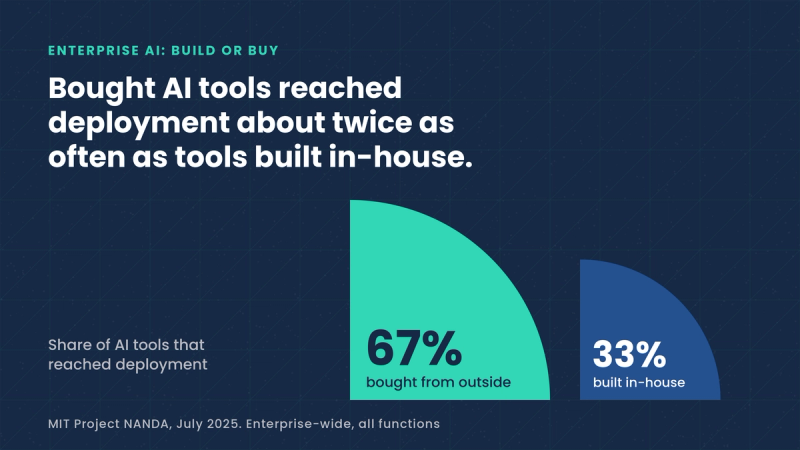
The team switches on only the assignments it needs, which answers the worry about paying for features nobody uses. Odie's Customer Operating System (opens in a new tab) also gives a daily evaluation of each account and an on-demand chat copilot, so teams comparing the two should look at both. Teams weighing whether to assemble this themselves can read the guide to whether to build or buy AI for customer success.
Trig: AI agents that do the account work
Trig is an agent-powered workspace for account management and customer success. A customer success platform gives the team dashboards, health scores and workflows, and the team does the work. In Trig, agents find the risks and opportunities, act on them in the team's existing tools within limits the team sets, and measure whether each assignment worked.
It suits lean teams that want to cover more accounts without adding headcount, and B2B SaaS teams that already use a product analytics tool. On retention, agents compare each account's usage with the months before it, rank the at-risk list by renewal value, and prepare a renewal report two weeks before each renewal with contract details, usage, support history and call summaries.
The evidence is published on Trig's site and can be checked. The customers below did not come to Trig from Totango.
- Owner. An eight-person team at Owner, a restaurant software company, spent four hours a day chasing onboarding by phone and email. With its first AI agent deployment, Owner cut pre-live churn by 52% and generated $1.3 million in business value, a 12x return, with results within two weeks. Read the customer story.
- Nory. Nory's first campaign lifted product activation from 30% to 83%, and 66% of its customers completed onboarding in under ten days. Read Nory's story.
On Trig security, Trig is ISO 42001 certified, SOC 2 Type 2 compliant and GDPR ready, and supports SSO and SAML. Customer data runs inside Trig's AWS infrastructure, is not sent to outside AI providers, and is never used to train foundation models. The published pricing is itself something a buyer can check before the first call.
How to switch from Totango to Trig
Moving from Totango to Trig is mostly a matter of connecting the tools you already use and rebuilding only the programs you still need.
- Check your Totango renewal date and notice period. Ask Odie what changes for you at that renewal, since current contracts are unchanged until then.
- Connect your existing tools. These are typically the CRM, data warehouse, product analytics, call recordings, help desk and Slack.
- Let Trig's team handle the connections. Trig's team does the initial connections and any legacy data migration. Your team explains the task, chooses the accounts, approves access and reviews the first results.
- Set up the first assignment. Describe it in plain English, review the plan, then start it. The Getting started page shows how to set up your first assignment.
- Add more assignments as you need them. Further assignments are self-serve, so rebuild only the Totango programs your team still uses.
- Run both until renewal if the contract requires it. Running Totango and Trig side by side lets the team compare results before the Totango term ends.
To see what this would look like on your own accounts, book a demo.
Totango alternatives: questions buyers ask
Will my Totango contract or pricing change?
Odie's announcement says legacy Totango and Catalyst customers keep the same contract, pricing, product and people, and that Odie will show them what is new when they are ready.
How much does Totango (now Odie) cost?
Odie publishes starting prices of $500 a month for the Customer Knowledge Engine and $1,500 a month for the Customer Operating System. Terms start at one year, most customers sign for two, and there is no seat pricing. Prices are as of November 13, 2026.
What are the best Totango alternatives for a small customer success team?
A small team without a platform administrator should weight setup effort and upkeep above feature count. Custify offers concierge onboarding and no setup fees, HubSpot Service Hub suits teams already in HubSpot, and Trig suits teams that want agents doing the account work on published, per-account pricing.
Can a customer success tool run without a dedicated admin or external contractor?
Yes, when the tool itself does the work that rules and dashboards would otherwise ask the team to set up. In Trig, managers describe assignments and reports in plain English, the agent plans and builds them, and Trig's team does the initial connections.
How do managers see account activity without customer success managers updating the platform by hand?
When agents prepare the briefs, draft the follow-ups and update the CRM, the record is written as part of the work. Managers see what was done on each account in the team's work views without anyone logging it separately.
Does Trig need advisor-led implementation?
Trig's team does the initial setup with you: connecting data, matching customer records across tools and building the first assignment. Further assignments are self-serve.
Is Trig's pricing public, and what is not included in it?
Yes. Trig is $250 a month for up to 500 accounts monitored weekly, then $1 per additional account per month, with unlimited users, as of November 13, 2026. AI credits are separate: 10,000 are included at the start, and more cost from $50 for 5,000.
See Trig on your own accounts
In Trig, agents do the account work across every account, on pricing published at $250 a month for up to 500 accounts. A demo shows the agents working on your own accounts, so you can compare it with Totango before your renewal date. Book a demo.